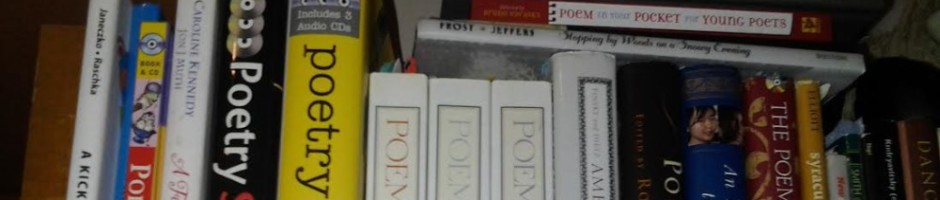
The day that reminds us all that it’s good to try writing poetry. Good poetry? Not necessary, there is a day out there just for you!
And the winner for original composition is
Liz Morath’s “The Basket”
The Basket
Seemed intrusive and out of place
Sharpe edges of straw jutting from its misplaced seams
A wrangle and tug of the stubborn lid
Unforgiving mold- not easy to drop in an opportune local
Ever reminding of summer’s easy flair
My new found love- my pocket book
~ Liz Morath
In the category of existing poetry we thank Wendy Bousfield for nominating the winning poem by John Keats.
I stood tip-toe upon a little hill
I stood tip-toe upon a little hill,
The air was cooling, and so very still,
That the sweet buds which with a modest pride
Pull droopingly, in slanting curve aside,
Their scantly leaved, and finely tapering stems,
Had not yet lost those starry diadems
Caught from the early sobbing of the morn.
The clouds were pure and white as flocks new shorn,
And fresh from the clear brook; sweetly they slept
On the blue fields of heaven, and then there crept
A little noiseless noise among the leaves,
Born of the very sigh that silence heaves:
For not the faintest motion could be seen
Of all the shades that slanted o’er the green.
There was wide wand’ring for the greediest eye,
To peer about upon variety;
Far round the horizon’s crystal air to skim,
And trace the dwindled edgings of its brim;
To picture out the quaint, and curious bending
Of a fresh woodland alley, never ending;
Or by the bowery clefts, and leafy shelves,
Guess where the jaunty streams refresh themselves.
I gazed awhile, and felt as light, and free
As though the fanning wings of Mercury
Had played upon my heels: I was light-hearted,
And many pleasures to my vision started;
So I straightway began to pluck a posey
Of luxuries bright, milky, soft and rosy.
A bush of May flowers with the bees about them;
Ah, sure no tasteful nook would be without them;
And let a lush laburnum oversweep them,
And let long grass grow round the roots to keep them
Moist, cool and green; and shade the violets,
That they may bind the moss in leafy nets.
A filbert hedge with wildbriar overtwined,
And clumps of woodbine taking the soft wind
Upon their summer thrones; there too should be
The frequent chequer of a youngling tree,
That with a score of light green breth[r]en shoots
From the quaint mossiness of aged roots:
Round which is heard a spring-head of clear waters
Babbling so wildly of its lovely daughters
The spreading blue bells: it may haply mourn
That such fair clusters should be rudely torn
From their fresh beds, and scattered thoughtlessly
By infant hands, left on the path to die.
Open afresh your round of starry folds,
Ye ardent marigolds!
Dry up the moisture from your golden lids,
For great Apollo bids
That in these days your praises should be sung
On many harps, which he has lately strung;
And when again your dewiness he kisses,
Tell him, I have you in my world of blisses:
So haply when I rove in some far vale,
His mighty voice may come upon the gale.
Here are sweet peas, on tip-toe for a flight:
With wings of gentle flush o’er delicate white,
And taper fingers catching at all things,
To bind them all about with tiny rings.
Linger awhile upon some bending planks
That lean against a streamlet’s rushy banks,
And watch intently Nature’s gentle doings:
They will be found softer than ring-dove’s cooings.
How silent comes the water round that bend;
Not the minutest whisper does it send
To the o’erhanging sallows: blades of grass
Slowly across the chequer’d shadows pass.
Why, you might read two sonnets, ere they reach
To where the hurrying freshnesses aye preach
A natural sermon o’er their pebbly beds;
Where swarms of minnows show their little heads,
Staying their wavy bodies ’gainst the streams,
To taste the luxury of sunny beams
Temper’d with coolness. How they ever wrestle
With their own sweet delight, and ever nestle
Their silver bellies on the pebbly sand.
If you but scantily hold out the hand,
That very instant not one will remain;
But turn your eye, and they are there again.
The ripples seem right glad to reach those cresses,
And cool themselves among the em’rald tresses;
The while they cool themselves, they freshness give,
And moisture, that the bowery green may live:
So keeping up an interchange of favours,
Like good men in the truth of their behaviours.
Sometimes goldfinches one by one will drop
From low hung branches; little space they stop;
But sip, and twitter, and their feathers sleek;
Then off at once, as in a wanton freak:
Or perhaps, to show their black, and golden wings
Pausing upon their yellow flutterings.
Were I in such a place, I sure should pray
That nought less sweet, might call my thoughts away,
Than the soft rustle of a maiden’s gown
Fanning away the dandelion’s down;
Than the light music of her nimble toes
Patting against the sorrel as she goes.
How she would start, and blush, thus to be caught
Playing in all her innocence of thought.
O let me lead her gently o’er the brook,
Watch her half-smiling lips, and downward look;
O let me for one moment touch her wrist;
Let me one moment to her breathing list;
And as she leaves me may she often turn
Her fair eyes looking through her locks auburne.
What next? A tuft of evening primroses,
O’er which the mind may hover till it dozes;
O’er which it well might take a pleasant sleep,
But that ’tis ever startled by the leap
Of buds into ripe flowers; or by the flitting
Of diverse moths, that aye their rest are quitting;
Or by the moon lifting her silver rim
Above a cloud, and with a gradual swim
Coming into the blue with all her light.
O Maker of sweet poets, dear delight
Of this fair world, and all its gentle livers;
Spangler of clouds, halo of crystal rivers,
Mingler with leaves, and dew and tumbling streams,
Closer of lovely eyes to lovely dreams,
Lover of loneliness, and wandering,
Of upcast eye, and tender pondering!
Thee must I praise above all other glories
That smile us on to tell delightful stories.
For what has made the sage or poet write
But the fair paradise of Nature’s light?
In the calm grandeur of a sober line,
We see the waving of the mountain pine;
And when a tale is beautifully staid,
We feel the safety of a hawthorn glade:
When it is moving on luxurious wings,
The soul is lost in pleasant smotherings:
Fair dewy roses brush against our faces,
And flowering laurels spring from diamond vases;
O’erhead we see the jasmine and sweet briar,
And bloomy grapes laughing from green attire;
While at our feet, the voice of crystal bubbles
Charms us at once away from all our troubles:
So that we feel uplifted from the world,
Walking upon the white clouds wreath’d and curl’d.
So felt he, who first told, how Psyche went
On the smooth wind to realms of wonderment;
What Psyche felt, and Love, when their full lips
First touch’d; what amorous and fondling nips
They gave each other’s cheeks; with all their sighs,
And how they kist each other’s tremulous eyes:
The silver lamp,—the ravishment,—the wonder—
The darkness,—loneliness,—the fearful thunder;
Their woes gone by, and both to heaven upflown,
To bow for gratitude before Jove’s throne.
So did he feel, who pull’d the boughs aside,
That we might look into a forest wide,
To catch a glimpse of Fawns, and Dryades
Coming with softest rustle through the trees;
And garlands woven of flowers wild, and sweet,
Upheld on ivory wrists, or sporting feet:
Telling us how fair, trembling Syrinx fled
Arcadian Pan, with such a fearful dread.
Poor Nymph,—poor Pan,—how did he weep to find,
Nought but a lovely sighing of the wind
Along the reedy stream; a half heard strain,
Full of sweet desolation—balmy pain.
What first inspired a bard of old to sing
Narcissus pining o’er the untainted spring?
In some delicious ramble, he had found
A little space, with boughs all woven round;
And in the midst of all, a clearer pool
Than e’er reflected in its pleasant cool,
The blue sky here, and there, serenely peeping
Through tendril wreaths fantastically creeping.
And on the bank a lonely flower he spied,
A meek and forlorn flower, with naught of pride,
Drooping its beauty o’er the watery clearness,
To woo its own sad image into nearness:
Deaf to light Zephyrus it would not move;
But still would seem to droop, to pine, to love.
So while the Poet stood in this sweet spot,
Some fainter gleamings o’er his fancy shot;
Nor was it long ere he had told the tale
Of young Narcissus, and sad Echo’s bale.
Where had he been, from whose warm head out-flew
That sweetest of all songs, that ever new,
That aye refreshing, pure deliciousness,
Coming ever to bless
The wanderer by moonlight? to him bringing
Shapes from the invisible world, unearthly singing
From out the middle air, from flowery nests,
And from the pillowy silkiness that rests
Full in the speculation of the stars.
Ah! surely he had burst our mortal bars;
Into some wond’rous region he had gone,
To search for thee, divine Endymion!
He was a Poet, sure a lover too,
Who stood on Latmus’ top, what time there blew
Soft breezes from the myrtle vale below;
And brought in faintness solemn, sweet, and slow
A hymn from Dian’s temple; while upswelling,
The incense went to her own starry dwelling.
But though her face was clear as infant’s eyes,
Though she stood smiling o’er the sacrifice,
The Poet wept at her so piteous fate,
Wept that such beauty should be desolate:
So in fine wrath some golden sounds he won,
And gave meek Cynthia her Endymion.
Queen of the wide air; thou most lovely queen
Of all the brightness that mine eyes have seen!
As thou exceedest all things in thy shine,
So every tale, does this sweet tale of thine.
O for three words of honey, that I might
Tell but one wonder of thy bridal night!
Where distant ships do seem to show their keels,
Phoebus awhile delayed his mighty wheels,
And turned to smile upon thy bashful eyes,
Ere he his unseen pomp would solemnize.
The evening weather was so bright, and clear,
That men of health were of unusual cheer;
Stepping like Homer at the trumpet’s call,
Or young Apollo on the pedestal:
And lovely women were as fair and warm,
As Venus looking sideways in alarm.
The breezes were ethereal, and pure,
And crept through half closed lattices to cure
The languid sick; it cool’d their fever’d sleep,
And soothed them into slumbers full and deep.
Soon they awoke clear eyed: nor burnt with thirsting
Nor with hot fingers, nor with temples bursting:
And springing up, they met the wond’ring sight
Of their dear friends, nigh foolish with delight;
Who feel their arms, and breasts, and kiss and stare,
And on their placid foreheads part the hair.
Young men, and maidens at each other gaz’d
With hands held back, and motionless, amaz’d
To see the brightness in each others’ eyes;
And so they stood, fill’d with a sweet surprise,
Until their tongues were loos’d in poesy.
Therefore no lover did of anguish die:
But the soft numbers, in that moment spoken,
Made silken ties, that never may be broken.
Cynthia! I cannot tell the greater blisses,
That follow’d thine, and thy dear shepherd’s kisses:
Was there a Poet born?—but now no more,
My wand’ring spirit must no further soar.
~ John Keats